VoltQuest: The Best Free Alternative to Proteus & Multisim for MCU Simulation
Key Takeaways
- 100% Free Forever: No subscriptions, no trial periods, no credit card required.
- Production-Grade Physics: Real-time Modified Nodal Analysis (MNA) solver with sticky damage mechanics.
- Multi-MCU Support: Simulate Arduino (AVR), ESP32/ESP32-S3 (Wi-Fi/MQTT), and Raspberry Pi GPIO in-browser.
- Zero Vendor Lock-in: Export BOMs, wiring diagrams, and
.inosketches for real hardware. - Instant Access: Runs entirely client-side via https://pcb.nevatal.id.
The Problem with Popular Commercial Tools: Expensive Subscriptions & Paywalls
For decades, engineers, students, and hobbyists have been forced into a false choice: buy expensive perpetual licenses or rent cloud-based subscriptions for circuit simulation and MCU development. The market leaders—Proteus Design Suite and NI Multisim—command prices ranging from $2,000 to $5,000+ for perpetual licenses or $100–$300/month for subscription tiers. Even specialized commercial MCU simulators often gate essential features like mixed-signal simulation, PCB integration, or IoT protocol stacks behind steep paywalls.
This model creates three critical friction points:
- Financial Exclusion: Students, educators, and indie makers cannot justify four-figure toolchains for learning or prototyping.
- Vendor Lock-in: Proprietary file formats and cloud-only compilation chains make migrating projects painful.
- Installation Overhead: Heavy desktop installers, license managers, and OS compatibility issues slow down the “time-to-first-blink.”
The industry needs a Gamified electronics laboratory MCU simulator that democratizes access without compromising on physics accuracy or feature depth. VoltQuest answers that call.
Introducing VoltQuest: A Production-Grade Free Alternative
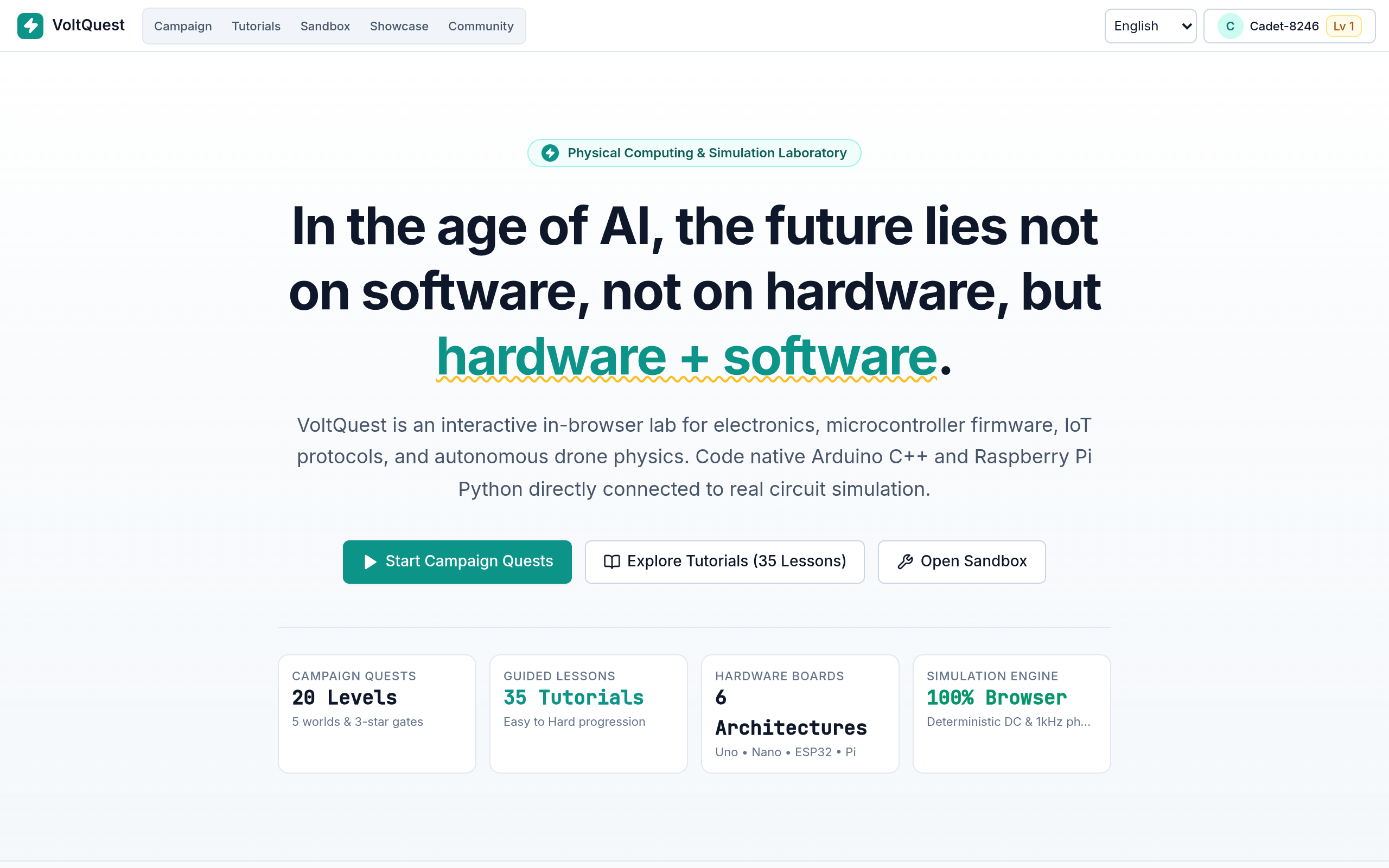
VoltQuest is a browser-based, zero-installation electronics laboratory and microcontroller simulator built on a client-heavy architecture. The circuit solver (Modified Nodal Analysis), the virtual machine (Web Worker VM), and the rendering engine (SVG Canvas) all execute 100% inside your browser. A lightweight FastAPI backend handles only persistence—auth, campaign progress, and project saves—via PostgreSQL or SQLite.
Because the heavy lifting happens locally, VoltQuest delivers 60 FPS responsiveness without cloud compute costs, allowing the team to offer the entire platform—including advanced features like MQTT simulation, drone PID tuning, and AI agent integration via MCP—completely free.
Head-to-Head Comparison: VoltQuest vs. Commercial Paid Tools
| Capability | VoltQuest (Free) | Proteus Design Suite ($$$$) | Multisim ($$$$) | Commercial MCU Simulators ($XX/mo) |
|---|---|---|---|---|
| Pricing Model | $0 / 100% Free | $2,000–$5,000+ License | $2,500+ License / Sub | $20–$100+/month |
| Circuit Solver | Real-time MNA (In-Browser) | SPICE (Desktop) | SPICE (Desktop) | Varies (Cloud/Local) |
| MCU Families | AVR, ESP32/S3, RPi GPIO | Extensive (Paid Packs) | Limited (Add-ons) | Often Single Vendor |
| IoT / Networking | VoltNet Wi-Fi & MQTT Sim | Requires VSM Studio | Limited | Often Extra Tier |
| Damage Mechanics | Sticky Damage & Magic Smoke | Basic Visuals | Basic Visuals |
Leave a Reply